
 Home
Home Credit Cards
 Personal Loans
 Car Loans
 Home Loans
 Business Loans
 Bank Accounts
 Calculators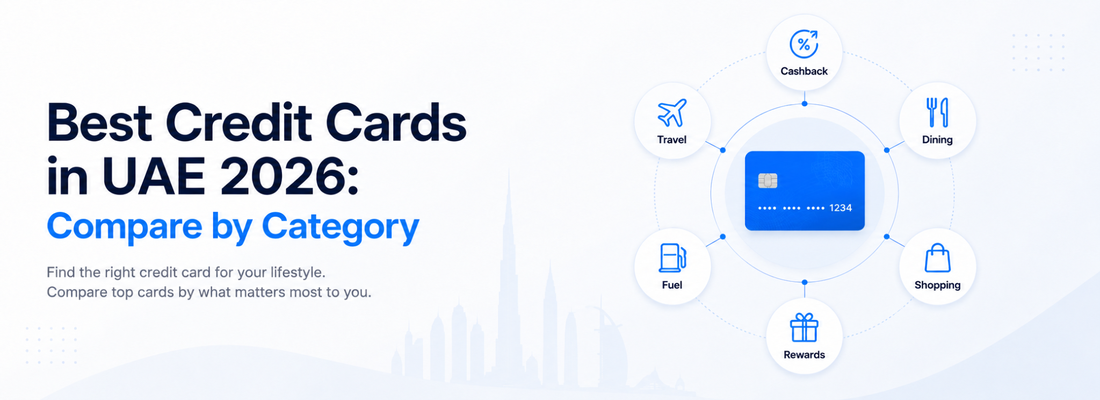
- There is no single best credit card for every UAE resident; the right choice depends on how you spend and repay.
- Cashback cards can suit everyday spending, while travel cards may work better for frequent flyers.
- No annual fee cards can be useful for simple card usage, but other fees and conditions still matter.
- Islamic credit cards may suit users who prefer Sharia-compliant banking structures.
- Compare cards by category, salary fit, spending habits, fees and actual benefit usage before choosing.
People often search for the best credit card in the UAE as if there is one simple answer. There is not.
A card that works beautifully for a frequent traveller may be average for someone who spends mostly on groceries and fuel. A card with a high cashback headline may be less useful if the cashback is capped or limited to categories you rarely use. A no-fee card may be better for a cautious first-time user than a premium card with benefits they will never use.
The smarter way to compare credit cards is by category. Once you understand what each type of card is built for, the decision becomes cleaner.
This guide explains the main credit card categories in the UAE and how to think about them before choosing. It does not rank individual products or claim one card is best for every user. The aim is to help you compare with more structure.
Start with your spending, not the card name
Most users begin with the wrong question: “Which card is best?”
A better starting point is: “Where does my money go every month?”
If most of your spending is on groceries, fuel and dining, cashback may matter more than air miles. If you travel often, lounge access and miles may become more useful. If you want to avoid annual fees, a simple no-fee card may be more practical. If you prefer Sharia-compliant structures, Islamic credit cards may be the right category to explore.
The card should fit your life, not the other way around. That means your salary, lifestyle and repayment habits should guide the shortlist before you get distracted by welcome offers or premium branding.
A practical comparison starts with normal behaviour. Think about what you already spend on, how often you travel, whether you pay in full, and whether you want simple savings or flexible rewards.
Cashback credit cards
Cashback cards are popular because they are easy to understand. You spend, and a portion of eligible spending may come back as cashback.
These cards can work well for UAE residents who spend regularly on daily categories such as groceries, fuel, dining, utilities or online shopping. They are especially attractive for users who prefer simple value over points or miles.
But cashback cards need careful reading. Cashback may be capped monthly. Some categories may earn more than others. Certain spends may be excluded. Some cards may require minimum monthly spend before cashback applies.
A cashback card is useful when the earning categories match your normal expenses. It is less useful when the headline rate looks attractive but applies to a small part of your spending.
When comparing cashback cards, look beyond the headline rate. Check where the cashback applies, whether there is a cap, whether minimum spend is required, and whether your largest monthly categories are included.
Travel and miles credit cards
Travel cards are designed for users who fly, book hotels or spend across travel-related categories. They may offer miles, lounge access, travel insurance, airport benefits or hotel privileges.
These cards can be valuable for frequent travellers, especially if they understand how miles or points are redeemed. A travel card may also make sense for users who spend enough to earn meaningful rewards and can use the benefits regularly.
However, travel cards are not automatically better than cashback cards. If you do not travel often, the benefits may sit unused. If redemption rules are complicated, the value may be harder to realise. If the annual fee is high, you should be comfortable that the benefits justify it.
Travel cards are best compared based on real usage, not emotional appeal. A card that looks premium in the airport may not be the best card for someone whose spending is mostly local.
If you are comparing travel cards, think about how often you fly, which routes you usually take, whether you use lounges, and whether you prefer miles or direct savings.
Islamic credit cards
Islamic credit cards are structured according to Sharia principles and may be offered by Islamic banks or Islamic windows of conventional banks. They can appeal to users who prefer Islamic banking products or want card features aligned with Sharia-compliant structures.
The benefits may still include cashback, rewards, travel privileges or lifestyle offers, depending on the card. The main difference is the underlying structure and applicable terms.
Users should review the product terms carefully, including fees, payment obligations and how the facility is structured. “Islamic” does not mean free of all charges. It means the product is structured under Islamic finance principles.
For users comparing Islamic and conventional cards, the decision may include both personal preference and practical benefit. The right product should align with your values and your actual spending needs.
No annual fee credit cards
No annual fee cards are often a strong starting point for first-time users or customers who want a simple card without a yearly cost.
These cards may offer basic benefits, limited cashback or simple rewards. They can be practical for users who want convenience, online payments, emergency flexibility or a way to build responsible card habits.
The phrase “no annual fee” should still be read carefully. Other charges may apply, such as finance charges, late payment fees, cash advance fees or foreign currency fees. Some cards may offer fee waivers only if conditions are met.
A no-fee card can be a smart choice when you want simplicity, but it should still be used responsibly. The absence of an annual fee does not remove the need to pay on time and understand charges.
This category can be especially useful for users who are new to credit cards, do not want to manage complex rewards, or want a secondary card for limited use.
Rewards cards
Rewards cards give points on eligible spending. Those points may be redeemable for vouchers, travel, merchandise, statement credit or partner benefits, depending on the issuer.
Rewards cards can be useful if the earning and redemption process is easy. They can also be frustrating if the value of points is unclear or redemption options do not fit your lifestyle.
Before choosing a rewards card, ask how much a point is really worth, where you can redeem it and whether your main spending categories earn rewards at a meaningful rate.
If you prefer simplicity, cashback may be easier. If you enjoy managing points and redemptions, rewards cards may offer flexibility.
The key is not just how many points you earn. It is what those points can actually do for you. A smaller number of useful points may be better than a larger number of points that are difficult to redeem.
Balance transfer credit cards
Balance transfer cards are designed for users who want to move outstanding balances from one card to another under a specific promotional or repayment arrangement.
This category is not about rewards. It is about managing existing card debt more carefully.
Balance transfer options can be useful for some customers, but they require discipline. You need to understand the promotional period, fees, repayment schedule, post-promotion charges and what happens if you miss a payment.
A balance transfer card should not be used as a way to avoid repayment. It should be used as part of a clear repayment plan.
If the transfer creates breathing room but not a repayment strategy, the benefit may disappear quickly. Users should know exactly how much they will pay every month and what happens after the promotional period ends.
Cards for large purchases and instalments
Some credit cards offer instalment plans for eligible purchases. This may help users spread the cost of electronics, furniture, travel bookings or other large expenses.
Instalment features can be useful when they are planned properly. But the user should understand fees, tenure, early settlement rules and whether the purchase remains affordable.
A card should not make an unaffordable purchase feel affordable. It should only help structure a purchase that already fits your budget.
Before using an instalment feature, compare the monthly payment with your regular commitments. The purchase should still leave enough room for rent, bills, savings and other obligations.
How salary affects category choice
Salary can influence which card categories are realistic. Entry-level users may focus on simple cashback, no-fee or basic rewards cards. Mid-income users may have more room to compare lifestyle and travel benefits. Higher-income users may be considered for premium cards with broader privileges.
Still, salary should not be the only filter. The right card category depends on how you use money.
A higher-salary customer who does not travel may still prefer cashback. A mid-income customer who travels frequently may value travel benefits more than dining discounts. A first-time user may prefer simplicity over premium perks.
This is why category comparison matters. It stops the user from assuming that a higher-tier card is automatically better and encourages a more useful question: does this card fit my actual life?
How to choose the right category
Start with your main spend areas. Then consider your repayment habits. If you always pay in full, rewards and cashback may matter more. If you sometimes carry balances, fees and finance charges should be a bigger part of the decision.
Next, check annual fees and conditions. A card with a fee can still be worth it if benefits are used well. A free card can still be costly if used carelessly.
Finally, choose a card category that matches your comfort level. Some users want simple cashback. Others enjoy travel rewards. Some want Islamic finance. Some just want a straightforward first card.
There is no universal best card. There is only the card that fits your profile better.
A good shortlist should feel boringly practical. It should reflect your income, your spending, your ability to repay and the benefits you will actually use.
How FinShark helps
FinShark helps UAE residents explore credit card options by profile, category and preference. Instead of comparing every card manually, users can begin with salary range, employment type, spending style and preferred benefits.
FinShark does not rank cards as guaranteed best for every user. Products are offered by third-party issuers and remain subject to issuer criteria, documents, fees and terms.
The aim is to make comparison more practical. A user who understands the difference between cashback, travel, Islamic, no-fee and balance transfer cards can move through the decision with more confidence.
Closing
The best credit card in the UAE is not necessarily the most premium card or the one with the biggest headline offer. It is the card that fits your salary, spending pattern, repayment behaviour and lifestyle.
Start with category. Then compare carefully.
Explore options based on your profile with FinShark.

Ready to put this into action?
Explore credit card options that may suit your profile, or estimate the numbers first with our UAE calculators. Eligibility applies.
This article is for general information only and does not constitute financial advice. FinShark is a marketing and information platform, not a bank, lender or financial adviser. Products are offered by third-party issuers and are subject to issuer eligibility criteria, fees, documentation and terms. T&Cs apply.